
You are using an out of date browser. It may not display this or other websites correctly.
You should upgrade or use an alternative browser.
You should upgrade or use an alternative browser.
Post your Train shots!
- Thread starter Rick M
- Start date

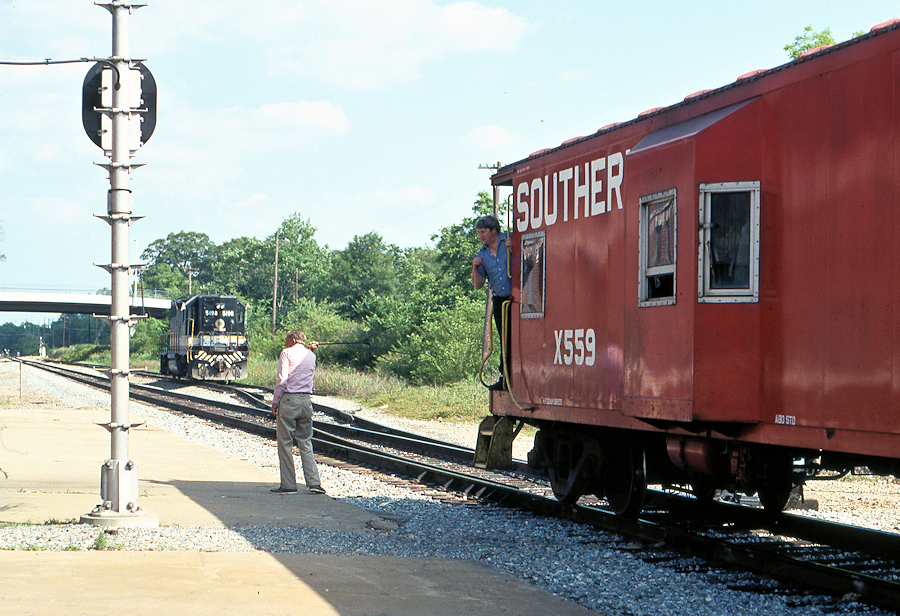
Along with cabooses, "hooping up" orders is yet another lost tradition. Until displaced by modern technology, train movements were controlled by written "Train Orders". These were exacting paper documents to be read by locomotive and caboose crews. Rather than stop trains to give them to crews, they were tied by string to a trackside "fork" (as held by the man in the pink shirt) and grabbed by crewmembers as they passed by. [Opelika, AL, May 1985, Kodachrome, Nikon SLR]
Last edited:

Burt
New member
Hi there, Nice to see another train's passionate... If you take a closer look, you can see that there is a lot of rust on things like the couplers, the fuel tank and the bogies... I would say it has been parked there for further dismantling and for spares... If you search online, you may be able to find more info on that particular cab...Bad neighborhood.(Actually, No. 7 is probably awaiting an engine) [Staunton, VA, 04/29/2026, D5100]
View attachment 428133

Thanks for the info, very interesting.Along with cabooses, "hooping up" orders is yet another lost tradition. Until displaced by modern technology, train movements were controlled by written "Train Orders". These were exacting paper documents to be read by locomotive and caboose crews. Rather than stop trains to give them to crews, they were tied by string to a trackside "fork" (as held by the man in the pink shirt) and grabbed by crewmembers as they passed by. [Opelika, AL, May 1985, Kodachrome, Nikon SLR]
View attachment 428823
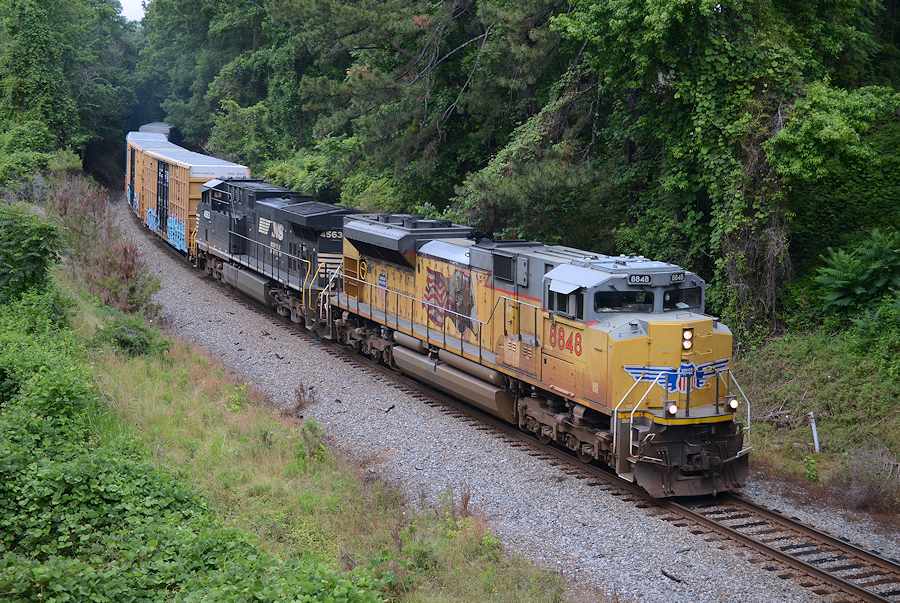
Another shot from Ridgeway, SC, but this one from today with a Union Pacific locomotive leading a Norfolk Southern train. These two large railroads are seeking to merge, but most all of the big railroads commonly swap locomotives amongst each other. It's always fun to see visiting locomotives. [D5100]
Last edited:

Whoa, that's a fine picture of a vintage PCC (Presidents Conference Committee) car.OK, not a train. An overhead-electric very light rail streetcar. In Kenosha, WI and it's pretty sneaky too.
I did a little research and it was built for Toronto's system in 1951. The PCC car design was a result of transit companies combining efforts to design the perfect car and their efforts were highly successful. About 5,000 were built beginning in the '30s into the early '50s. They can even be found in Europe. They're such a nice and rare sight today. If I ever visit Kenosha, I'll be aboard.

BF Hammer
Senior Member
History - About Your Kenosha P.C.C. Streetcars
Kenosha’s six former Toronto streetcars were part of a group of 50 Presidents’ Conference Committee (P.C.C.) streetcars numbered 4500 to 4549 and were the last new P.C.C. streetcars ordered by the Toronto Transit Commission (TTC) in March 1950. They entered service at the St. Clair Division in early 1951. TTC designated the cars class A-8. The cars were more austere than previous TTC P.C.C. streetcars in order to save money and were assembled by the Canadian Car and Foundry Company with components and body shells provided by the St. Louis Car Company, St. Louis, Missouri.
Between 1972 and 1975, the six Kenosha cars along with 168 other P.C.C. streetcars were rebuilt to remain operational for five to ten years while suitable replacement equipment was being sought. Eventually that equipment, the Canadian Light Rail Vehicle (CLRV) started replacing 200 non-rebuilt P.C.C. cars in September 1979. In addition to the CLRV, which was similar to a PCC in design and capacity, Toronto acquired a fleet of larger, articulated light-rail vehicles (ALRV). As the LRVs entered service TTC gradually retired the PCC cars over the period 1977 to 1992. In the last few years of their operation they were used to supplement the LRVs during weekday rush hour service.
In 1985, a new Light Rail Transit Line (L.R.T), Harbourfront Spadina was proposed and the T.T.C. decided to rebuild 19 surplus A-8 class P.C.C. streetcars as an alternative to purchasing costly new cars. Those cars, which included the Kenosha cars, were completely rebuilt between 1987 and 1991. In December of 1995, all but two of those cars became surplus and were sold. Five cars were purchased for Kenosha at bargain prices, reconditioned and painted in the liveries of five North American cities—Toronto (4610), Cincinnati (4616), Chicago (4606), Johnstown/Kenosha (4615), and Pittsburgh (4609). The cars were like new. They have received excellent maintenance and will last indefinitely.
https://www.kenoshastreetcarsociety.org/historyTwo additional P.C.C. cars joined the operating fleet in October of 2011. The cars had been at the East Troy Electric Railroad Museum. The East Troy Board decided to deaccess the cars. They were purchased by East Troy member John DeLamater, and donated to Kenosha Area Transit for service in Kenosha. The cars are former TTC 4617 and former SEPTA 2185. TTC 4617 is a "twin" of the other five TTC cars (photo above). It was painted in the original TTC livery when it arrived in Kenosha. It received extensive body work in 2015, and was repainted in the livery of the San Francisco Municipal Railway (MUNI). SEPTA 2185 wears the last P.C.C. livery of the Philadelphia streetcars: red, white, and blue (photo below). For photos of each car, click on Kenosha Fleet.pdf
The name P.C.C. is derived from the Electric Railway Presidents’ Conference Committee (ERPCC), a committee formed by presidents of privately owned street railway properties in 1930 with Dr. Thomas Conway Jr. as Chairman. The purpose of this committee was to create superior technology for modern Electric Railway rolling stock. The first P.C.C. cars were air-electric (with air-operated brakes) and were introduced by the Brooklyn and Queens Transit Corporation, in 1936, going into service on the 68 Smith Coney Island line. After WWII, all PCCs manufactured in the United States were all-electric. The last U.S. produced P.C.C. streetcars were a group of 25 delivered to the Municipal Railways of San Francisco in 1951-52. The last car was numbered 1040. Car 1040 survived and was rebuilt by Brookville Equipment; it operates regularly in San Francisco on the F Line.
The P.C.C. streetcar was conceived by professionals and expert foresight, a design classic, and a triumph of U.S. know-how in an era when America n technological genius led the world. Over 5,000 units were produced for North American Systems and long after America forgot its P.C.C. cars, 16,000 were produced under license in Europe. Thousands of cars using P.C.C. parts were also built in the USSR without license from the ERPCC.
Unfortunately, in North America, one streetcar operation after another gave way to motor buses after WWII, in part due to a conspiracy of the motor bus and the oil industry, and only a handful of streetcar systems survived. Ironically, the P.C.C. streetcars on those systems regardless of good or poor maintenance outlived their replacement, the motor bus, by decades. PCC streetcars continue to operate in 2017 in Boston, Kenosha, Philadelphia, San Diego, and San Francisco.
BF Hammer
Senior Member
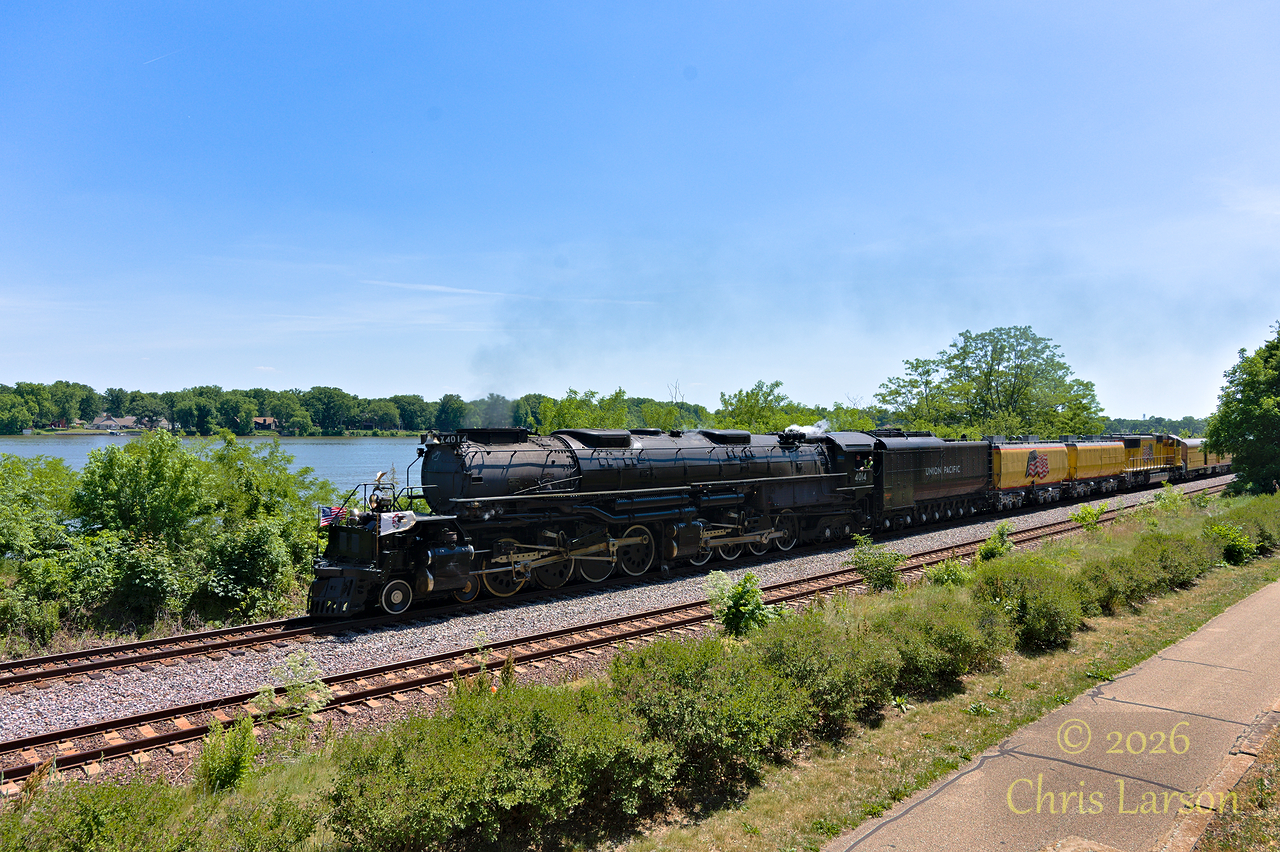
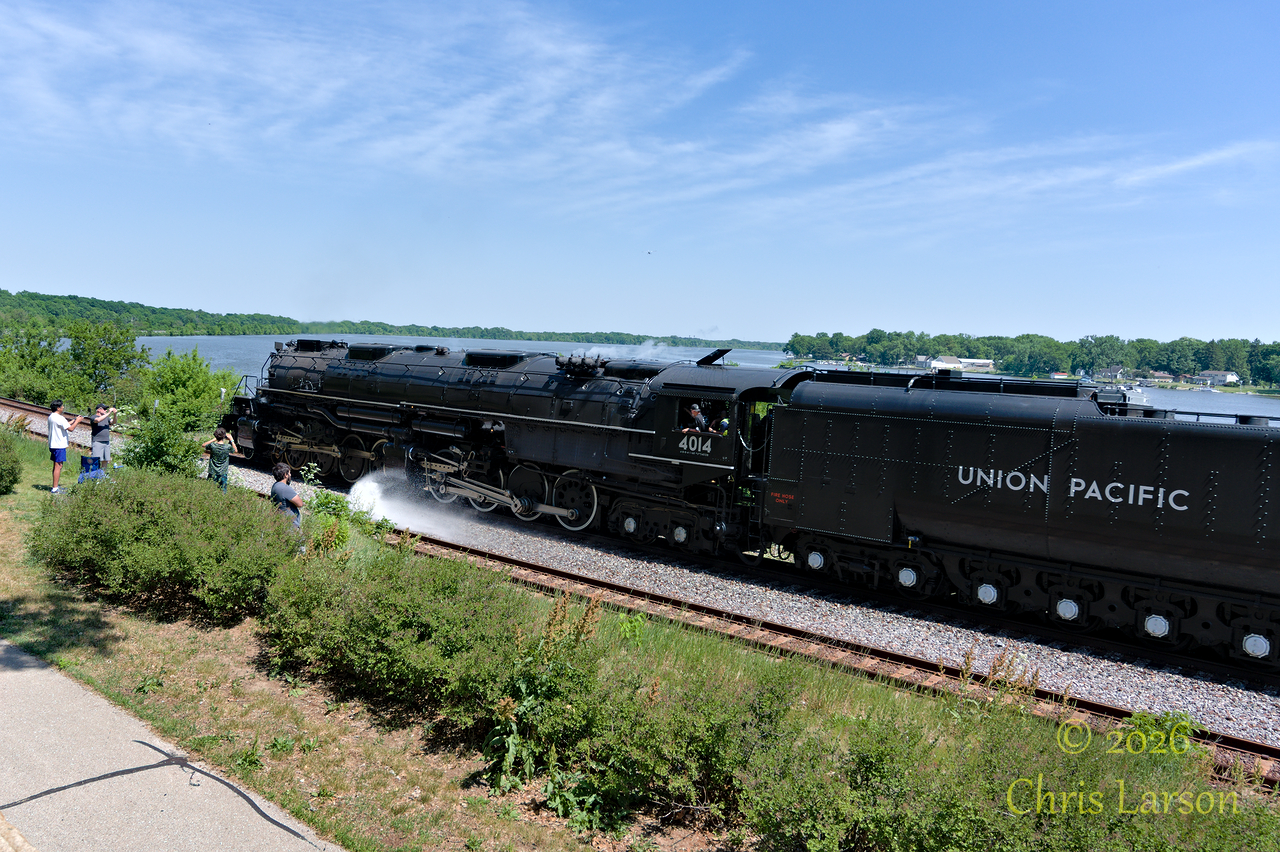
6-2-2026: Sterling IL near the causeway on the Rock River. Union Pacific 4014 Big Boy leaving it's whistle-stop downtown.
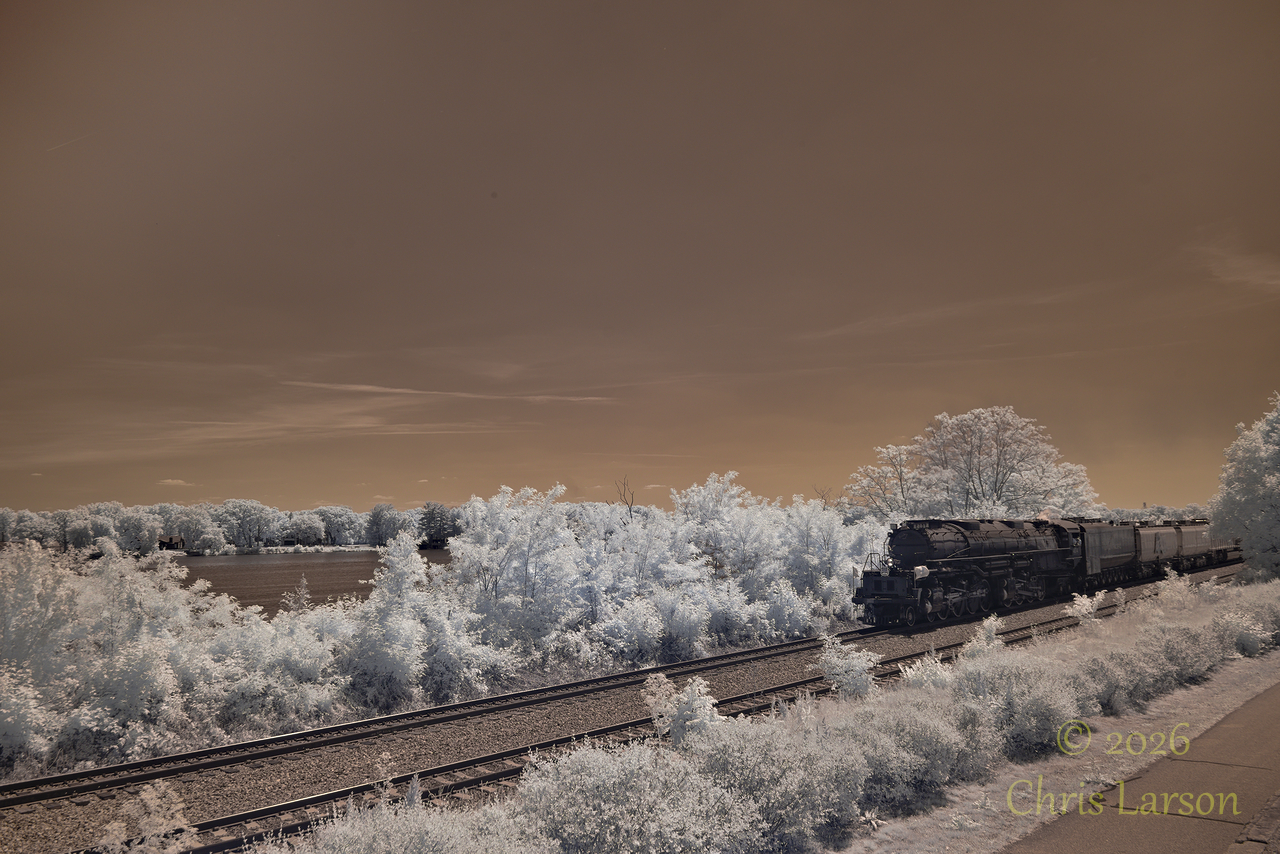
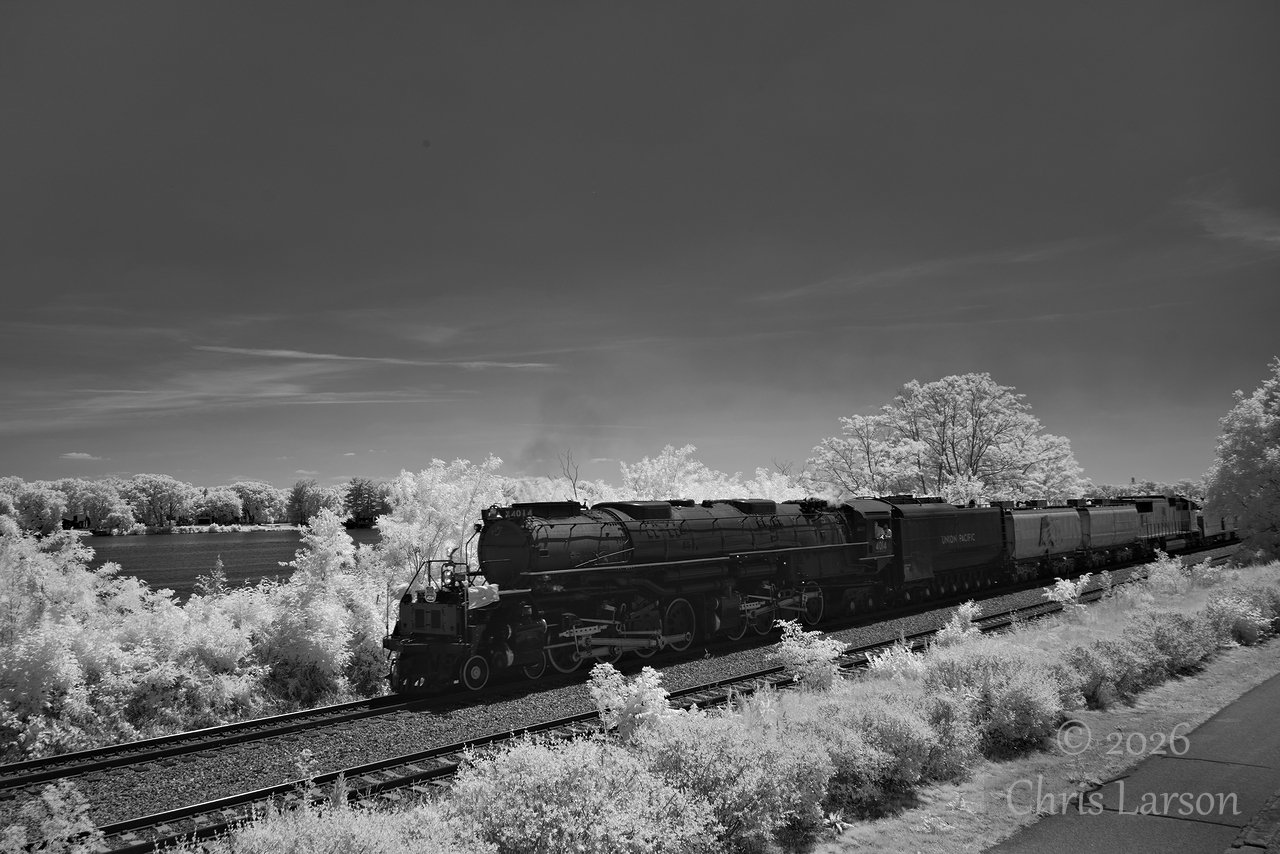
Inserted video in my Project 360 thread. Not particularly proud other than I successfully juggled setting up and operating 3 cameras at the same time at 2 locations.
Inserted video in my Project 360 thread. Not particularly proud other than I successfully juggled setting up and operating 3 cameras at the same time at 2 locations.