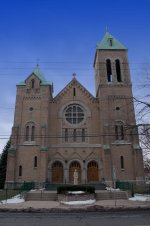
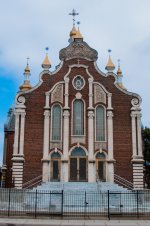
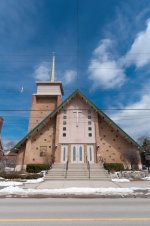
John, you are way ahead of everyone and ironically I also first noticed the triptych was much more than a style of artwork in 2017. I only recently was able to move beyond it being an ancient religion and have realized that the 3 panel, 4 fold pattern is depicting the structure of reality itself. I have linked it to a polytope referred to as the 24 cell and a 3,4 torus knot called a Clifford Torus. I've attached the first part of my paper this post has room for that is a work in progress attempting to understand the Triptych through physics. Unfortunately it isn't updated with recent discoveries yet, but it's a good starting point for looking at what the ancient world was trying to tell us about the triptych. My email is included so if you want to contact me for any reason feel free.
Triality, Return, and the 24-Cell
SO(4) Double Rotation, Spin-Lift Memory, and the Continuity-Kernel Program
Core Formal Paper v1.4 - Closure and Integration Edition
Matthew B. Waltman
[email protected]
Prepared June 2026 - Closure Addendum
Abstract
This paper consolidates the verified geometry, bounded dynamics, definition-level operator scaffold, and current repair program of the Triptych / GRP / AC Loop / Harmonic Axis corpus. The central new closed result is that the (3,4)-torus-knot return-current is exactly the orbit of the SO(4) double rotation R_3,4(theta)=diag(R(3theta),R(4theta)) through a Clifford-torus point. Its Cayley/isoclinic factorization has angles 7theta/2 and -theta/2, up to left/right naming convention.
One completed traversal closes the ordinary vector geometry, R_3,4(2pi)=I_4, while its lift to Spin(4) ends at the nontrivial kernel element (-1,-1). A second traversal restores (+1,+1). This supplies a concrete Z_2 spin-memory that a pure norm-square readout cannot detect but a same-source two-arm phase reference can detect. The result gives the continuity/hidden-register hypothesis a topological component without proving that the Z_2 residue is the entire missing engine.
The paper retains the closed 24-cell geometry: the D4 Clifford-torus 16-on/8-off split, the 4 exact-hit/12 still-point partition, the Spin(8) vector-spinor-spinor address grammar, the Hopf-latitude center/wing separation, and the spinor-to-stella-octangula projection. It also integrates the Closure Addendum: the finite pre-Bridge objects and sixfold PSD readout close at definition level; 678->789 is gauge-trivial under the current norm-square readout; the historical B0.1 Floquet separation is suspended as unreproduced; the Kuramoto advantage is retained only as a strong-coupling baseline; and the zero-address arithmetic signal is demoted at N=600 against a density-matched null.
The staged repair is a Triptych connection / continuity-kernel program. Three fold maps define closed transport; the same incoming state is split into a reference arm and a returned arm; dual I/Q interference measures relative phase while preserving quadratic homogeneity. The Spin(4)->Spin(8) branching needed to connect the exact chiral rotation factors to the 8_s and 8_c wing octets remains open. The Harmonic Axis symbol match and Bridge Identity remain the proof wall.
1. Minimal Axioms, Primitives, and Formal Objects
This section freezes the primitives used later. It answers the main structural criticism of earlier drafts: the terms Chamber, Center, Return, address, harmonic body, phase-lift, readout, and Bridge must be defined before being used.
1.1 Definition: Triptych Chamber
A Triptych Chamber is the static address object
C = (V_24, T, H, iota, A)
where V_24 is the 24-cell vertex set, T = {8_v, 8_s, 8_c} is the Spin(8) triality partition, H:S^3 -> [-1,1] is a Hopf-height function, iota(v) = -v is antipodal inversion, and A = C^24 is the address Hilbert space with basis vectors |p,a,sigma>.
p in {v,s,c}, a in {1,2,3,4}, sigma in {+,-}.
The chamber is sealed when the address set is antipodally complete and any motion-current is constrained to return without occupying the Center.
1.2 Definition: Center
The Center has three compatible registers. This avoids the prior error of treating a single word as a point, a vertex set, a source, and a node at once.
Register | Formal object | Meaning |
Barycentric Still Point | 0 in R^4 | Not a vertex and not a traversed address. |
Axial address center | 8_v = {+/-e_1, +/-e_2, +/-e_3, +/-e_4} | Vector-octet rest-anchor address system. |
Hopf-core layer | H^{-1}({+1,-1}) | Axial/core structure relative to a chosen Hopf splitting. |
The return-current may link, orbit, report to, or be referenced by the Center. It may not occupy, consume, or replace it.
1.3 Axiom: Triptych Law
- Center stillness. The Center is a rest-reference, not a motion-current.
- Wing separation. The spinor wings 8_s and 8_c remain distinct from the axial vector octet 8_v.
- Lawful return. Motion returns around the Center through the wing layer.
- No collapse. No node, current, projection, engine-shadow, local creator, or institution may replace the Center.
This axiom is the formal version of the source-law sentence: the current may return around the Center; it may not become the Center.
1.4 Definition: Triptych Return System
A Triptych Return System adds motion and report to the static chamber:
R = (C, gamma_3,4, R_tau, theta(t), A(t), Psi(t), Phi(t)).
Here gamma_3,4 is the topological return-current on the Clifford torus, R_tau is the delayed return-error operator, theta(t) is a phase parameter, A(t) is a breath/amplitude envelope, Psi(t) is an oriented pre-readout, and Phi(t) is a nonnegative report/readout.
1.5 Definition: Return ladder
Return level | Formal object | Status |
Topological return | gamma_3,4:S^1 -> T_Cliff | Closed geometric object. |
Dynamical return | R_tau h(t)=h* - h(t-tau) | Model-level DDE object. |
Acoustic return | 141/164.5/188 = 6/7/8; 47 outer interval | Staged drive/report register. |
Nonlinear report return | E(t)=s(t)^2 - <s(t)^2> | Staged cymatic/readout layer. |
Operator return | R_S(g)=||T_S g||^2 | Open Harmonic Axis Bridge closure. |
1.6 Definition: Triptych address system
A Triptych address is a triple (p,a,sigma) with p in {v,s,c}, a in {1,2,3,4}, and sigma in {+,-}. The address Hilbert space is
A = span{|p,a,sigma>} ~= C^24.
Panel projections are
P_p = sum_{a,sigma} |p,a,sigma><p,a,sigma|, P_v + P_s + P_c = I_A.
This identity is an address-space identity, not an ambient R^4 coordinate projection identity. Each octet individually spans R^4 as a 16-cell frame. Address adjacency is staged: the actual 24-cell edge graph and any symbolic Triptych transition graph must be distinguished.
1.7 Definition: Triptych phase space
The 24-cell is not the full phase space. It is the address chamber inside a larger phase/report system. A minimal Triptych phase state contains:
Variable | Role |
address x in V_24 or |p,a,sigma> in A | where the state is registered |
phase theta in S^1 | where the return-current is along the loop |
breath envelope A(t) >= 0 | inhalation/exhalation or amplitude component |
return error e_tau(t)=h* - h(t-tau) | delayed return relative to Still Point |
oriented pre-readout Psi(t) | signed direction before positivity |
positive readout Phi(t) >= 0 | proof-compatible/report-compatible scalar or form |











 I find it interesting that once I started looking for them how many of these examples I found just close to my home.